How to Read a Transformer Nameplate: Every Field Explained
Read transformer kVA, voltage, phase, taps, impedance, windings, cooling class, fluid, serial data, year, and weight before you sell.
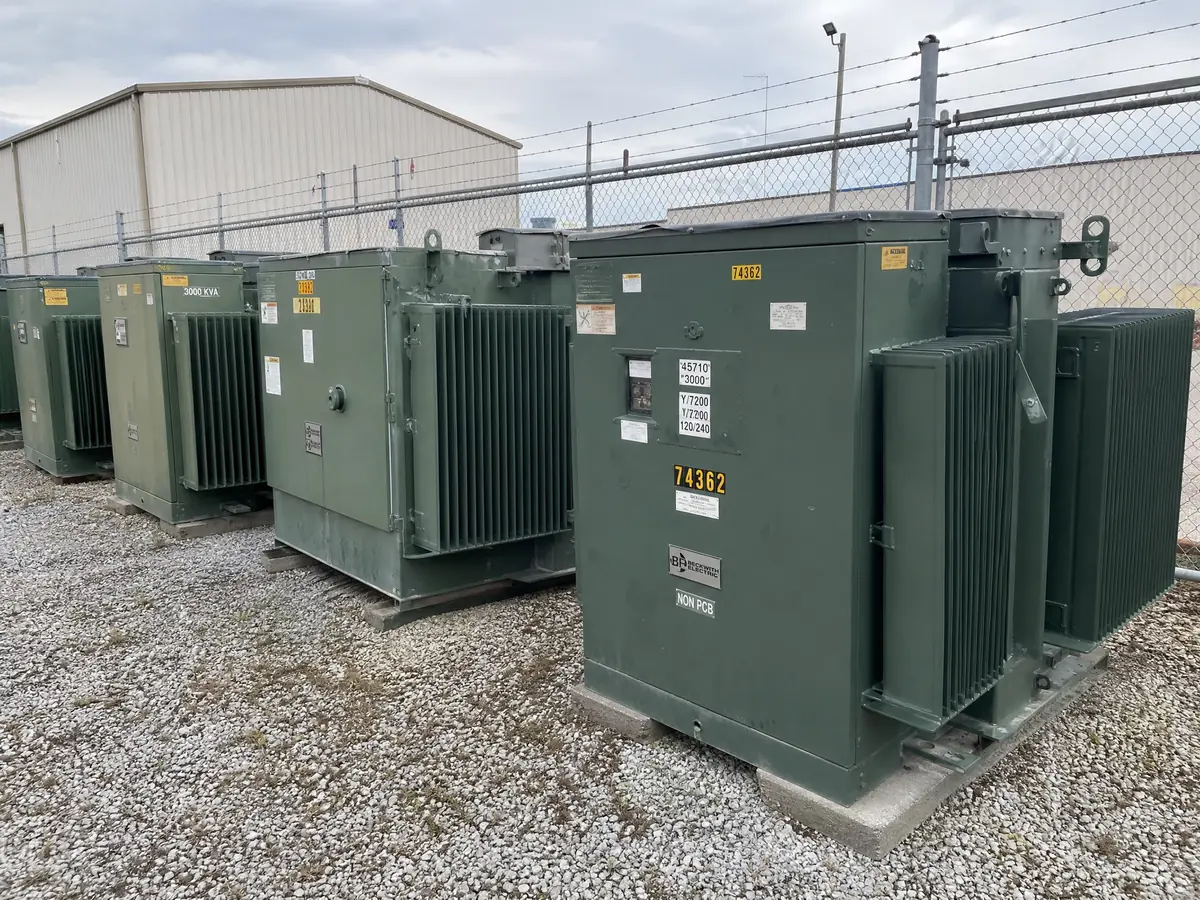
The nameplate is the transformer's birth certificate — one clear photo of it tells us nearly everything needed for a firm offer. This guide decodes each field so you know exactly what you own and what drives its value.
Find the nameplate on the tank front or side (padmounts: inside the front hood, on the divider panel). It's a metal plate, usually aluminum, stamped or engraved. Photograph it straight-on with the whole plate in frame.
Nameplate Fields Decoded
| kVA | Capacity rating — the single biggest value driver |
|---|---|
| HV / Primary volts | e.g., 12470GrdY/7200 — the incoming utility voltage |
| LV / Secondary volts | e.g., 480Y/277 — what the building uses; common = valuable |
| %Z (Impedance) | Matters for paralleling; 5.75% is the common standard |
| Winding material | CU (copper) or AL (aluminum) — CU adds 15-30% |
| Serial & year | Age and factory traceability; post-1979 = presumed non-PCB |
| Oil type & gallons | Mineral or FR3; volume matters for transport planning |
| Weight | Total and untanking weights — sets rigging and freight |
Start with kVA and the voltage configuration
The kVA rating defines the transformer's continuous power capacity and is the first specification buyers use to categorize a unit. Some nameplates show a base rating and a higher fan-cooled rating; photograph both so the available cooling stages are clear. Higher capacity can expand the resale opportunity, but only when the remaining electrical specifications match a real application.
Primary and secondary voltage determine whether the transformer is compatible with a utility feed and the facility load. Capture the complete notation, including grounded-wye or delta symbols, neutral availability, and any dual-voltage arrangement. Tap settings matter too: they show how the unit can compensate for modest supply-voltage differences without changing its basic ratio.
Phase, frequency, and cooling class
The phase field distinguishes single-phase from three-phase equipment, while frequency identifies whether the unit was designed for the 60 Hz systems common in the United States or a different market. These are compatibility requirements, not optional details; a mismatch can make an otherwise clean transformer unsuitable for the intended installation.
Cooling designations describe how heat leaves the core and windings. Liquid-filled units commonly show ONAN or ONAF ratings, while dry-type units may use AA or FA designations. Forced-air stages can support a higher listed kVA rating, so include the cooling class and fan rating when documenting the nameplate.
Impedance, winding material, fluid, and weight
Percent impedance (%Z) affects available fault current and load sharing when transformers operate in parallel. Buyers also look for winding material, temperature rise, insulation class, and BIL because those fields narrow the applications where the unit can be reused. Do not infer copper or aluminum from appearance; photograph the exact nameplate field when it is listed.
For liquid-filled equipment, record the fluid type and volume. Total weight, untanking weight, and oil weight shape the crane, trailer, permitting, and loadout plan. These physical fields do not determine electrical compatibility, but they can materially affect the net value after removal and transportation costs.
The three photos that get you a same-day offer
One: the full nameplate, straight-on and legible. Two: the whole unit from the front showing bushings or terminals. Three: the surroundings showing loading access. With those three frames we can usually quote common configurations within one business day.
What if the nameplate is missing or unreadable?
We can still work with it: measurements, bushing count and style, tank dimensions, and any stenciled utility numbers narrow the identification. Expect conservative pricing until physical inspection — missing nameplates force worst-case assumptions on winding material and PCB status.
Ready to sell? Get your offer today.
Send photos and nameplate details — we respond with a firm offer, typically within 24 hours. Freight and rigging arranged nationwide, payment before pickup.
Frequently Asked Questions
- Where is the nameplate on a padmount transformer?
- Open the front hood (it may be pentabolt-secured): the plate is on the divider panel between the HV and LV compartments.
- What does 'No PCB' on the nameplate mean?
- The unit shipped with non-PCB oil — a meaningful value protector for pre-1990s units. Photograph that label too.
- The plate lists two kVA ratings — which counts?
- Both: the base (OA/ONAN) rating and the fan-cooled rating. Quote conversations use the base rating by convention.
- Does the manufacturing year determine transformer value?
- Year is one factor, but specifications, condition, maintenance history, fluid type, winding material, and current demand also matter. A well-documented older unit may still have resale value when its ratings fill an active need.
- Why should I photograph the insulating-fluid field?
- Fluid type and volume affect compliance, handling, maintenance, freight weight, and buyer suitability. Capture any mineral-oil, silicone, ester-fluid, or non-PCB marking along with the main nameplate.
Authoritative References
- NEMA — Transformer product standards — the manufacturer association whose standards govern nameplate marking conventions on North American transformers.
- EPA — PCB marking and labeling requirements — background on the 'No PCB' labeling and why post-1979 units are presumed non-PCB.
- IEEE C57.12.00 — General requirements for transformers — the standard that defines the rating data (kVA, voltage, impedance) stamped on every nameplate.