How to Sell an Electrical Panel: What Buyers Pay For
Document and sell surplus panelboards and switchboards correctly. See which mains, branch breakers, bus details, labels, photos, and conditions affect value.
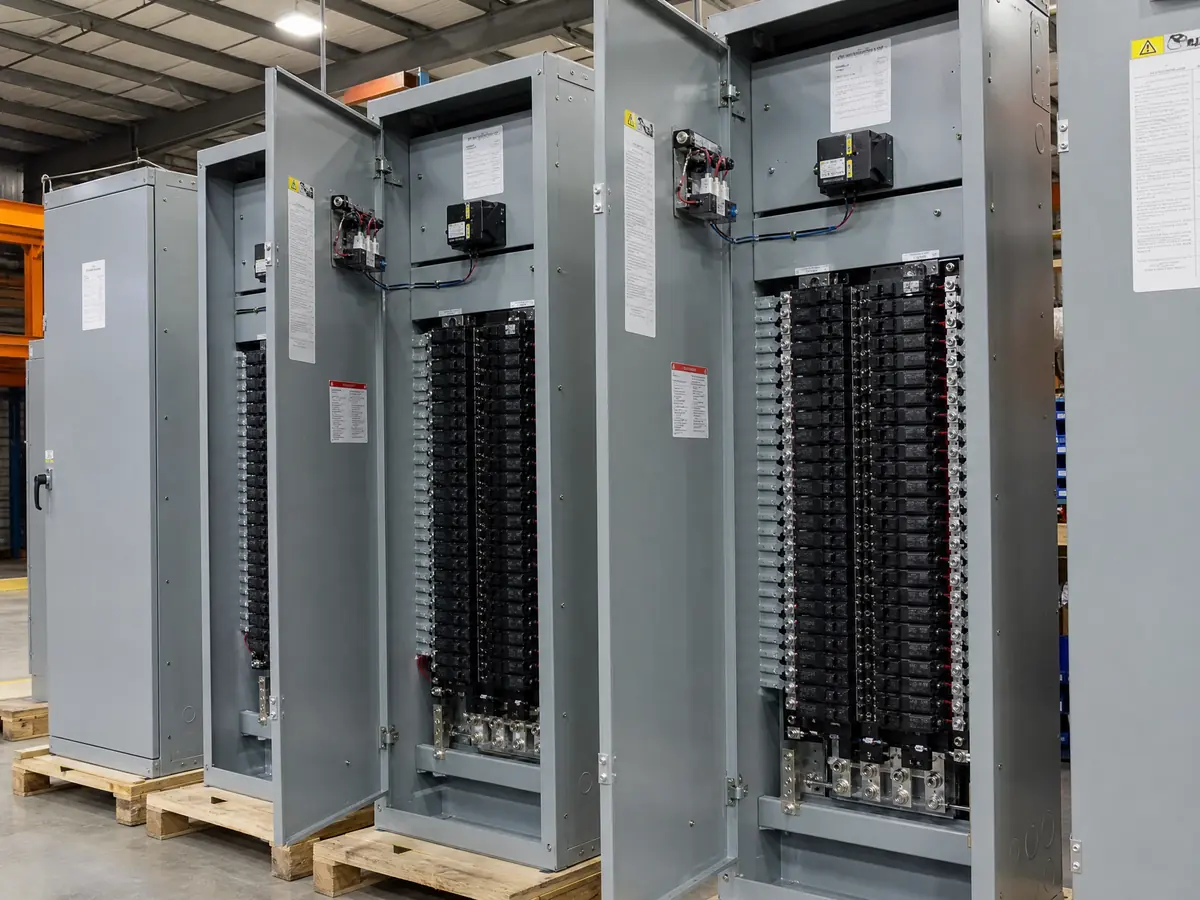
When a facility upgrades its electrical infrastructure, decommissions a building, or scales down operations, surplus electrical panels and switchboards are often left behind. For contractors, plant managers, data-center teams, and demolition firms, these assets represent significant recoverable value rather than just scrap metal. Selling an electrical panel requires an understanding of what components hold the most value in the secondary market, from the main breakers and branch circuits to the bus material and the physical enclosure itself. Buyers are actively seeking reliable, well-maintained panelboards to supply other industrial operations, commercial buildings, and utility projects that need replacement parts or complete assemblies quickly.
Industrial Electrical Surplus buys transformers, switchgear, circuit breakers, panels, MCCs, and cable nationwide. The process of selling your surplus panels is designed to be straightforward and efficient, prioritizing quick evaluation and seamless logistics. Sellers send photos and nameplate details, and the company arranges freight/rigging. Payment is issued before pickup. Phone is (951) 903-9804. Whether you are liquidating a single switchboard or an entire plant's electrical distribution system, understanding the buyer's criteria ensures a smooth transaction.
What Types of Electrical Panels Are Most Valuable?
The secondary market for electrical panels is diverse, but certain types and configurations consistently command higher value. Industrial and commercial panelboards, particularly those designed for high-amperage applications, are in demand. Switchboards that distribute power to various branch circuits within a large facility are highly sought after, especially if they feature robust copper bus material and modern, interchangeable components. Both main breaker panels and main lug only configurations have their specific use cases in the secondary market, depending on the buyer's requirements for primary overcurrent protection and distribution.
Beyond the complete panel assembly, the internal components often hold substantial value independently. Interiors, including the mounting hardware and busbars, are critical for buyers looking to repair or retrofit existing installations. Panels manufactured by major, widely recognized brands tend to retain their value better due to the ongoing need for compatible replacement parts across various industries. Whether you have a single heavy-duty switchboard or a large inventory of lighting and distribution panelboards, assessing the brand, amperage rating, and overall condition is the first step in determining the equipment's marketability and potential return.
How Do Branch Breakers and Mains Impact the Selling Price?
A significant portion of an electrical panel's value is derived from the circuit breakers housed within it. The main breaker, which serves as the primary point of disconnect and overcurrent protection for the entire panel, is typically the most valuable single component. High-amperage main breakers, especially those with adjustable trip units or advanced electronic trip functions, are prized by buyers looking to upgrade their systems. When selling a panel, detailing the specifications of the main breaker—including its frame size, continuous amperage rating, and interrupting capacity—is crucial for receiving an accurate and competitive valuation.
Branch breakers also play a vital role in the overall appraisal of the panel. A panel fully populated with functioning, desirable branch breakers is worth considerably more than an empty enclosure or one with obsolete, damaged breakers. Buyers look for standard bolt-on or plug-on breakers that can be readily reused in other compatible panels across different facilities. When preparing your equipment for sale, taking a detailed inventory of the branch breakers, noting their amperages, pole configurations, and condition, helps buyers understand the complete package they are purchasing. Even if the enclosure itself is heavily worn, a strong complement of usable breakers can make the panel an attractive acquisition.
Why Is Bus Material and Enclosure Condition Important?
The conductive bus material inside an electrical panel is a key factor in its valuation. Copper busbars are generally preferred over aluminum due to their superior conductivity, durability, and resistance to corrosion over time. Panels equipped with heavy-duty copper bus systems handle thermal stress better and typically command a premium. When evaluating a panel, buyers will want to know the material of the busbars and whether they show any signs of pitting, overheating, or significant oxidation, which could indicate past electrical faults.
The physical condition of the enclosure also matters significantly, particularly for buyers intending to reuse the panel in its entirety. The enclosure should be structurally sound, free of severe rust, and have intact doors, hinges, and latches. NEMA-rated enclosures designed for outdoor or harsh environments can be especially valuable if they have maintained their weather-resistant integrity. Additionally, the presence of original manufacturer labels, detailed wiring diagrams, and clear nameplates significantly enhances the panel's value, as this documentation is essential for verifying specifications.
What Photos and Details Do Buyers Need for an Appraisal?
To provide a fast and accurate valuation, buyers rely heavily on the information and visual evidence supplied by the seller. The most critical piece of information is the panel's main nameplate, which contains the manufacturer, model number, voltage rating, phase, and maximum amperage capacity. A clear, well-lit photograph of this nameplate is the essential starting point for any appraisal. If the panel includes a main breaker, a separate, close-up photo of the breaker's label detailing its specific ratings, frame size, and trip unit is equally important for a complete assessment.
In addition to nameplate photos, sellers should provide comprehensive images of the panel's exterior and interior. Wide shots showing the overall condition of the enclosure help buyers assess any physical damage or environmental wear. Opening the panel and photographing the interior layout, including the bus material and the arrangement of branch breakers, gives a complete picture of the asset's contents. If there are any missing covers, visible modifications, or signs of thermal damage, these should be clearly documented. Supplying this detailed information upfront allows for a firm, reliable offer quickly, without the need for extensive back-and-forth communication or physical inspections.
How Should Panels Be Prepared for Removal and Freight?
Proper preparation for removal and transport ensures the equipment arrives safely and retains its full value. Electrical panels and switchboards can be extremely heavy and awkwardly balanced. It is crucial that the equipment is safely disconnected from all power sources, verified dead, and properly uninstalled by qualified personnel before the freight process begins. Any loose components, such as blanking plates, uninstalled breakers, or mounting hardware, should be securely fastened inside the enclosure or packaged separately to prevent loss or damage during transit.
Industrial Electrical Surplus handles all the logistics of freight and rigging, making the process seamless for the seller. However, the seller plays a vital role in preparing the equipment for the carrier's arrival. Panels should be securely strapped to sturdy, appropriately sized pallets using heavy-duty banding. For larger switchboards, specialized blocking may be necessary to prevent tipping or shifting inside the truck trailer. Because payment is issued before pickup, sellers can focus entirely on safely staging the equipment for the scheduled freight carrier, knowing the financial transaction is already secure.
Ready to sell? Get your offer today.
Send photos and nameplate details — we respond with a firm offer, typically within 24 hours. Freight and rigging arranged nationwide, payment before pickup.
Frequently Asked Questions
- Do you buy electrical panels that are missing their covers or doors?
- Yes, panels missing covers or doors can still be purchased. While a complete enclosure is ideal for resale, the internal components, such as the main breaker, branch breakers, and copper bus material, often hold significant value on their own. Please provide detailed photos showing the exact condition of the panel and what specific parts are present so we can provide an accurate offer.
- How do I determine if my panel has copper or aluminum busbars?
- You can often determine the bus material by visually inspecting the conductive bars inside the panel where the breakers connect. Copper busbars will have a distinct reddish-brown color (unless they are tin-plated, which gives them a silver appearance but typically have copper visible at cut ends), while aluminum busbars are typically dull silver. The panel's specification sheet or main nameplate may also indicate the bus material used.
- Will you buy the branch breakers if I want to keep the panel enclosure?
- Absolutely. If you prefer to keep the enclosure for future use, or if it is built into a wall and difficult to remove without causing facility damage, we can purchase just the main and branch circuit breakers. Simply send us clear photos and a comprehensive list of the breakers you have available, and we can provide an offer based solely on those components.
- Who is responsible for loading the heavy switchboards onto the freight truck?
- Industrial Electrical Surplus arranges all freight and rigging as part of the purchasing process. Depending on the size of the equipment and the facilities available at your site (such as a standard loading dock or an available forklift), we will coordinate with specialized carriers or professional riggers to ensure the switchboards are safely and professionally loaded for transport.