Seller Guide
How to Read a Transformer Nameplate: Every Field Explained
Every field on a transformer nameplate explained — kVA, primary and secondary voltage, impedance, cooling class, and why buyers need these before quoting.
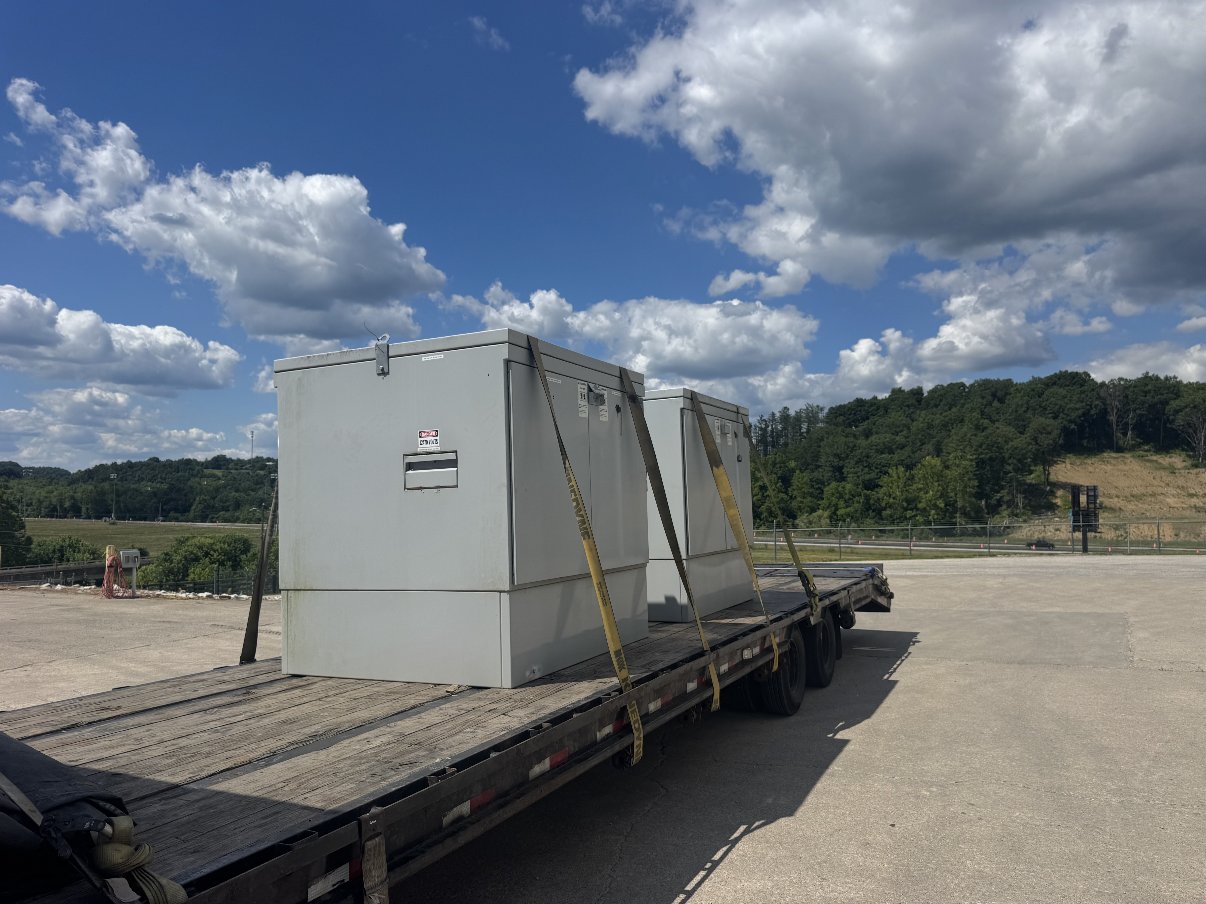
Every request we make of a seller starts the same way: send us a photo of the nameplate. It is not bureaucracy. The nameplate contains the entire specification of the unit, and without it no buyer can distinguish a common, in-demand transformer from an oddity with almost no market.
Nameplates look intimidating because they are dense with abbreviations, but only a handful of fields drive value. Once you know which ones matter and what they mean, you can read any transformer nameplate in under a minute and know roughly where your unit stands.
Key Takeaways
- Five fields do most of the work: kVA, primary voltage, secondary voltage, phase, and cooling class.
- Cooling class codes reveal whether the unit is oil-filled or dry-type — the single biggest handling distinction.
- Impedance, temperature rise, and tap configuration refine the value but rarely change the category.
- Photograph the whole plate straight-on in good light; partial or angled photos are the top cause of quoting delays.
- If the nameplate is missing or illegible, photos of the unit and its connections still allow a conditional offer.
kVA rating: the size of the unit
kVA is apparent power capacity, and it is the first thing any buyer looks for. It establishes the physical class of the unit and, combined with voltage, tells a buyer immediately whether this is a common commercial-service size or something unusual.
On multi-rated units you may see more than one figure — for instance, a base rating and a higher forced-cooled rating. Both matter; photograph the plate so all of them are legible rather than transcribing one.
Primary and secondary voltage: what it steps from and to
These two fields define the transformer's job. The primary is the incoming side, the secondary is what it delivers. Standard distribution combinations have deep markets because they match how the majority of commercial and industrial services are built.
You will often see voltages written with additional notation indicating winding configuration — delta or wye connection, and whether a neutral is brought out. That notation matters to a buyer because it determines which installations the unit can serve.
- Primary voltage — the incoming, higher-voltage side
- Secondary voltage — the delivered, usually lower voltage
- Delta or wye winding configuration, often shown as a symbol or abbreviation
- Whether a secondary neutral is provided
- Tap voltages, if the unit has adjustable taps
Phase: single or three
Three-phase units dominate industrial and commercial applications and generally have the broader market. Single-phase distribution transformers are common in utility service and also trade actively, particularly pole-mounted and smaller pad-mounted units.
This field is usually unambiguous on the plate, listed simply as the number of phases or with a phase symbol.
Cooling class: the field that tells you oil versus dry
Cooling class is expressed as a short letter code, and it is the most operationally important field after rating and voltage because it determines how the unit must be handled, transported, and documented.
Codes beginning with a letter indicating liquid immersion identify oil-filled or fluid-filled units — these are the ones with transport and potential PCB documentation considerations. Codes indicating air cooling identify dry-type units, which are simpler to move but generally command different pricing per kVA.
If you take only one thing from a nameplate beyond the rating, take this: knowing whether a unit is liquid-filled or dry changes almost everything about the logistics of selling it.
The secondary fields, and when they matter
Beyond the core five, several fields refine a buyer's assessment without usually changing the fundamental category of the unit. Impedance affects how the transformer behaves in a system and matters when a buyer is matching a specific application. Temperature rise indicates the insulation system's design and relates to loading capability. Basic impulse level relates to insulation coordination on the primary side.
You will also find the manufacturer, a serial number, and often a date of manufacture. Manufacturer matters for reconditioning support. Serial number occasionally allows a shop to pull original test records. Date of manufacture matters less than people assume, but on oil-filled units it factors into PCB assumptions and testing decisions.
Nameplate fields by priority
| Field | Why it matters | Priority |
|---|---|---|
| kVA rating | Establishes size class and market depth | Essential |
| Primary / secondary voltage | Defines the application it can serve | Essential |
| Phase | Single vs three-phase market | Essential |
| Cooling class | Oil-filled vs dry-type — drives handling and documentation | Essential |
| Manufacturer | Reconditioning support and parts availability | High |
| Impedance | Application matching for the next installation | Moderate |
| Temperature rise | Insulation system and loading capability | Moderate |
| Serial / date | Test record retrieval; PCB assumptions on oil units | Moderate |
| BIL | Insulation coordination on the primary side | Lower |
How to photograph a nameplate so it's actually usable
More quoting delays come from unusable nameplate photos than from any other cause. The plate is often stainless steel in a shadowed cabinet, which produces glare and blown-out text with a flash and unreadable murk without one.
Shoot straight on rather than at an angle, fill the frame with the plate, and wipe off dust or oil film first. If glare is a problem, block the direct light source with your body rather than using flash. Take two shots from slightly different positions — one of them will almost always be readable. If the engraving is worn, raking light from the side often makes stamped characters legible again.
- Shoot straight on, filling the frame with the plate
- Wipe dust and oil film off the plate first
- Avoid flash on stainless plates; shade the plate instead
- Take two or three shots from slightly different angles
- For worn engraving, use light raking across the surface to reveal stamped characters
What if the nameplate is gone?
Missing nameplates happen, especially on units that have been stored outdoors or moved several times. It does not make the unit unsellable — it makes the offer conditional until specifications can be established.
In those cases, photographs of the overall unit, the bushing arrangement, the tank or enclosure construction, and any remaining stamped markings usually allow an experienced buyer to bracket the unit's class closely enough to quote. Utility asset records or original project documents, if anyone still has them, close the gap completely.
Ready to sell? Get your offer today.
Send photos and nameplate details — we respond with a firm offer, typically within 24 hours. Freight and rigging arranged nationwide, payment before pickup.
Frequently Asked Questions
- Which nameplate fields do you need to quote?
- kVA rating, primary and secondary voltage, phase, and cooling class cover the essentials. Manufacturer is very helpful. A clear photo of the full plate gives us everything at once.
- How do I tell if a transformer is oil-filled or dry-type from the plate?
- Read the cooling class code. Codes indicating liquid immersion identify oil or fluid-filled units; air-cooling codes identify dry-types. If the code is unclear, the physical construction — sealed tank with radiators and bushings versus a ventilated enclosure — usually settles it.
- The nameplate is unreadable. Can you still make an offer?
- Usually yes, as a conditional offer. Photos of the overall unit, bushings, and enclosure construction let us bracket the specification closely enough to quote, and we confirm on inspection.
- Does the date of manufacture reduce the value?
- Much less than most sellers expect. Condition and specification dominate. On oil-filled units the date does influence PCB testing assumptions, which affects handling more than the equipment's underlying value.
- Do you need the serial number?
- It's useful but not required. Occasionally a serial number lets a shop retrieve original factory test records, which strengthens the unit's resale position.